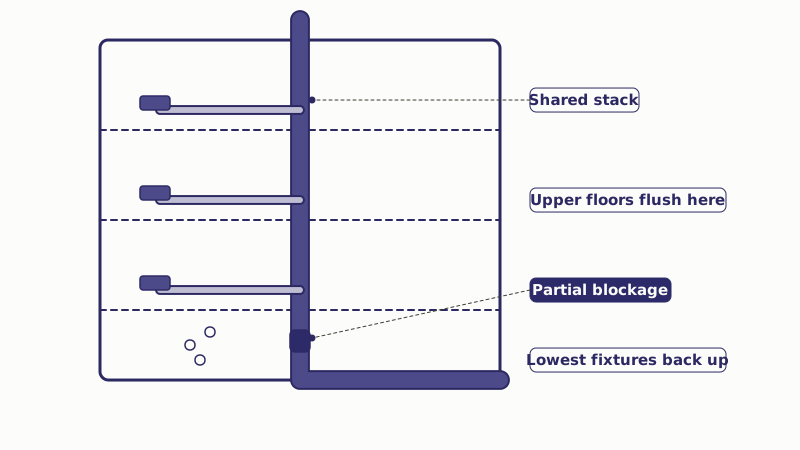
Koreatown puts more households on each block than anywhere else in the city. The Census counts 20,067 homes in ZIP code 90005, only about 5 in 100 of them houses, and about two thirds of the homes are in complexes of 20 or more units. Ninety-one in every hundred households rent. The result is plumbing in which one failure reaches many doors at once. This page belongs to our Los Angeles neighborhoods guide and links back to the City of Angels Plumbing home page.
Why do Koreatown drains back up so often?
Because so many units drain into the same vertical stack. When a stack partly blocks with grease, wipes or scale, the lowest fixtures show it first: a ground-floor tub gurgles, a floor drain overflows, a toilet rises when someone upstairs flushes. The cause is usually not your fixture, and clearing the trap under your own sink will not help.
The typical home in this ZIP code was built around 1963, which places most of the housing in the era of cast iron drain stacks that corrode from the inside. A stack that has carried decades of waste for dozens of kitchens can be narrowed by scale long before it cracks. A camera pass shows which it is, and our page on a plumbing inspection and camera cost lists what that visit typically runs.
If the whole building has slow drains or a sewer smell on several floors, the problem may sit in the private sewer lateral. LA Sanitation says the owner maintains that pipe from the building to the public main, which makes it a decision for the owner. For a smell in your unit alone, start with the sewer smell plumber page, since a dry trap is a far cheaper cause.
How do restaurants and shops change the plumbing picture?
Koreatown mixes dense housing with restaurants, karaoke bars, salons and grocers along Wilshire, Western and Vermont. Food service adds fat to the drains, and city rules push back: LA Sanitation's grease program says new food service construction must include a grease interceptor, and a remodel valued at $100,000 or more must add one.
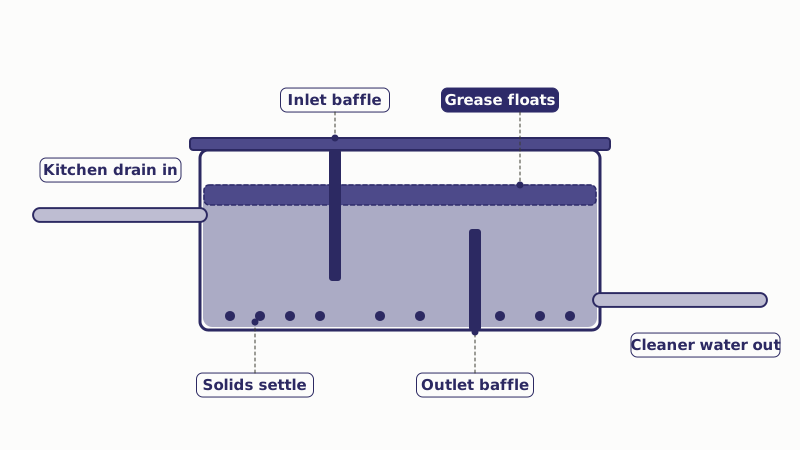
A building with a restaurant on the ground floor and apartments above often shares part of its drain system with it. Grease that is poured or washed down in the kitchen travels to the same stack that serves the units upstairs, so one kitchen that skips interceptor cleaning can slow apartments overhead. A plumber who mostly does bathroom work is not always the right fit for a commercial kitchen; ask whether the person has worked with interceptors and floor drains.
Commercial properties may also have a backflow prevention assembly on the water service. LADWP requires these to be tested every year by a tester holding a Los Angeles County credential, and our backflow testing page explains the process and what a missed test can mean for the owner.
Who pays for a repair in a Koreatown condo or rental?
It depends on whether the building is a rental or a condominium. In a rental, the owner pays for the building's pipes and shared systems, and tenants report problems in writing. In a condo, the association owns the common lines such as risers, stacks and the roof drains, while each owner is responsible for what lies inside their own unit under the association's rules.
Most Koreatown renters will deal with the Los Angeles Housing Department, which takes habitability complaints online and by phone at 866-557-7368. Complaints about condominiums go to the Department of Building and Safety rather than the Housing Department, because the Housing Department covers rental apartment complexes. Check your association's governing documents before you book a plumber for anything behind a wall.
Water damage is where disputes arise. A leak that starts in the unit above, runs through your ceiling and ruins your floor involves both owners and often both insurers. Photograph everything before cleaning, shut the water if you can reach the valve, and hold the plumber's written findings; they show where the leak began. Our guide to leak repair and detection lists the questions to ask.
What do plumbing jobs cost in Koreatown?
Published Los Angeles guides put a plumber's hourly rate at roughly $100 to $200, and a clogged toilet service call at about $110 to $275, according to the figures on our clogged toilet plumber page. Stack and sewer line work costs more because of the camera, the equipment and the access involved. A written quote sets the real number.
Access is the main driver in this neighborhood. Plumbers face metered street parking, narrow service alleys, locked garages and elevators with reservation windows. A job that needs a cable machine or a jetter carried to the fourth floor may take longer than the same job in a house, and quotes reflect that. Giving the building's loading rules in your request avoids a surprise.
Sewer camera inspections run about $250 to $500 in Los Angeles guides, and a pre-purchase sewer scope is often a flat fee in the same band. Those numbers are a guide, and the quote you receive should name the method and the scope in writing.
What rules apply to plumbing work in Koreatown?
Koreatown lies inside the City of Los Angeles, so LADWP supplies the water, LA Sanitation owns the public sewers and LADBS issues plumbing permits. Los Angeles Municipal Code Section 94.103.0 sets out when a permit is required, and some work on defective water piping is treated differently from new installations. Ask the contractor which permit applies and who pulls it.
California requires a contractor with a state license for work of $1,000 or more, and you can check a license on the Contractors State License Board website. Gas piping is regulated work: if you smell gas, leave the building, call SoCalGas on 1-800-427-2200 from outside and call 911 if there is danger.
Building owners of larger properties should also remember the grease and backflow requirements above. A plumber can tell you what is likely to be inspected, but the owner holds the obligation, and records from the last interceptor cleaning or backflow test are the first thing an inspector asks for.
How should you arrange a plumber visit in Koreatown?
Give the building the details a plumber needs: your unit number, the entry code or the manager's contact, whether the elevator needs reserving, and where the shut-off valve is. If more than one unit is affected, say so. Our quote page collects these details, and a local plumber then comes to you with a written price.
For active leaks in a stack or riser, tell the manager first, since only they can shut water to a column of units. If a sewer backup is coming up through floor drains, stop using water in the building and call. LA Sanitation takes calls on sewer overflows on 1-800-773-2489 at any hour.
Common questions
How much does a plumber cost in Koreatown?
Plan on about $100 to $200 an hour in published Los Angeles guides, and about $110 to $275 for a clogged toilet call. Stack clearing and camera work are quoted by the job, and camera inspections run about $250 to $500. These are guide figures, not our prices, and access in a dense building can push a quote higher.
Are there council rules for plumbing in Koreatown?
Yes. LADBS issues plumbing permits in the City of Los Angeles, LA Sanitation sets grease interceptor rules for food service, and LADWP requires yearly backflow testing where an assembly is installed. California also requires a contractor with a state license for jobs worth $1,000 or more. Gas work is regulated, so call SoCalGas first if you smell gas.
Is a blocked stack the tenant's or the landlord's problem?
The landlord's, in a rental. A stack serves many units and belongs to the building. Report the backup in writing, photograph standing water and keep a copy. If the owner does not act, the Los Angeles Housing Department takes habitability complaints on 866-557-7368. In a condominium, the association usually handles shared stacks.
Why does my Koreatown apartment smell of sewer gas?
A dry floor drain or sink trap is the most common cause, so run water for a minute first. If the smell returns or affects several units, a vent or drain line may be damaged, and the owner should call a plumber for a camera check. Gas-like smells are different: if it smells like natural gas, leave and call SoCalGas.
Do restaurants need special plumbing in Koreatown?
Yes. LA Sanitation requires new food service construction to include a grease interceptor, and a remodel valued at $100,000 or more must add one. The interceptor has to be cleaned on a schedule, and a commercial kitchen often needs floor drains and sometimes a backflow assembly. Ask a plumber who works on commercial kitchens, not only homes.