Replacing a shut-off valve costs about $125 to $350 for a sink or toilet valve and about $150 to $800 for the main shut-off to the house, with most main-valve jobs between $200 and $600. A pressure regulator runs about $200 to $700. These are national and regional guides, not quotes. Access, pipe type and whether the water must be shut off at the street decide where you land.
A shut-off valve that will not close, or a regulator that has failed, is often what a plumber finds when you report weak or heavy pressure. This page prices those jobs. It is part of our guide to a plumber for low water pressure.
How much should a water pressure regulator cost?
Angi puts the average at about $400 for a replacement, with most homeowners paying $200 to $700, and simple repairs $75 to $200. HomeAdvisor gives the same $200 to $700 range. The part is usually $50 to $250. The rest is labor, access and extras such as a gauge or a new shut-off valve.
Other published guides run higher or lower, so treat the middle of the range as the realistic one. A regulator that is easy to reach, with a good shut-off valve ahead of it, is a one to two hour job. If the plumber has to cut into old pipe, or if a new valve and an expansion tank are needed, the price climbs.
The California Plumbing Code says a regulator needs a strainer in front of it, and an expansion tank after it in the cold water piping, so a code-compliant job may include both. Our page on the water pressure regulator explains what the part does and what it should be set to.
What do plumbers charge to replace a shut-off valve in Los Angeles?
Published prices put a fixture shut-off, the small valve under a sink or behind a toilet, at about $125 to $350 for a plumber to replace. A main water shut-off valve runs about $150 to $800, depending on access. Forbes gives $150 to $600 for the main valve, and other guides give $200 to $600.
| Job | Guide range |
|---|---|
| Sink or toilet shut-off valve (angle stop) | $125 to $350 |
| Main shut-off valve, easy to reach | $200 to $600 |
| Main shut-off, buried, boxed in or behind a finished wall | $500 to $1,200 |
| Pressure regulator replacement | $200 to $700 |
| Simple regulator adjustment or repair | $75 to $200 |
| Plumber hourly rate, typical | $85 to $150 |
These figures come from published cost guides from Forbes, Angi and HomeAdvisor and from plumbing businesses' own price pages, checked in November 2026. They are guides, and some come from other regions, so Los Angeles quotes may differ. The written quote is the real price.
The valve itself is cheap, usually under $40 for a small one. The price you pay is mostly labor, access and the risk of a pipe breaking when an old valve is turned.
What pushes the price of a shut-off valve job up or down?
Access is the biggest factor, followed by pipe material, valve size and whether the water has to be turned off at the street. An easy valve under a sink costs the least. A buried main valve, or one behind a finished wall, costs the most because the plumber has to open the wall or dig.
The things that change a quote:
- Where the valve is. In a crawl space, a yard box or behind drywall, expect more labor and sometimes patching.
- Pipe material. Old galvanized steel pipe can crack when a valve is removed, so the plumber may need to replace a length of it. See galvanized pipe replacement. Copper and PEX are simpler.
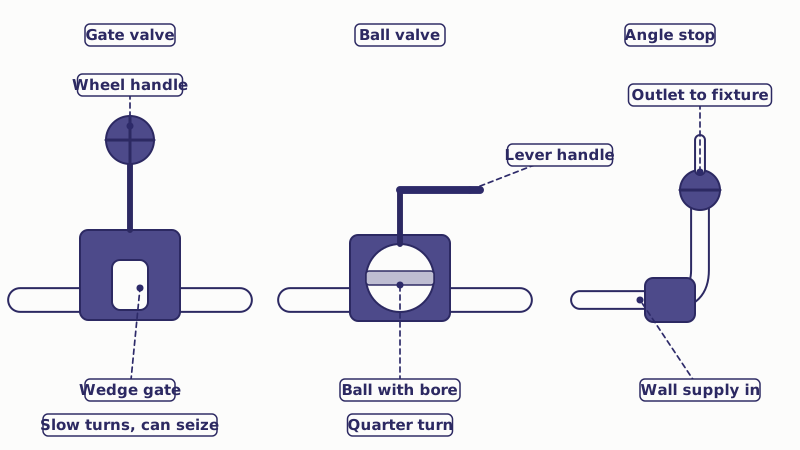
- The type of valve. A quarter-turn ball valve costs a little more than a gate valve and lasts longer. Many plumbers prefer ball valves for mains.
- Shutting off at the meter. If the house has no working main valve, the plumber may need the water off at the meter. The meter and the street side belong to LADWP, and the house side belongs to you.
- Permits. Work on the main line may need a permit, and the plumber can tell you whether yours does.
- Several jobs at once. Replacing the main valve, regulator and fixture stops in one visit saves a call-out fee. A call-out on its own is covered in plumber service call cost.
In older Los Angeles homes, from the 1920s to the 1950s, valves that have not been turned in decades often seize, and the first attempt to close one can break it. If you have never tested your main valve, ask the plumber to do it on any visit.
Is a shut-off valve worth replacing before it fails?
Yes, if it will not turn fully, drips around the handle, or has never been used. A shut-off valve exists to stop water in an emergency. If it does not close, a burst pipe or a failed toilet supply floods the house while you search for another way to stop it. Replacing it ahead of time costs a fraction of the damage.
Test every valve once a year: the main, the water heater supply, and the stops under sinks and behind toilets. Turn each closed, then open. A valve that is stiff, leaks or does not stop the flow is a candidate for replacement. Our guide on replacing a toilet shut-off valve explains the simple case.
A failed shut-off valve is also one of the reasons a plumber cannot start a repair without shutting off the whole house.
What about the pressure reducing valve, the regulator?
A pressure reducing valve, often called a PRV or regulator, is a different part from a shut-off valve. It controls pressure inside the house. The California Plumbing Code requires one where static pressure exceeds 80 psi, and LADWP says regulators are typically set between 50 and 70 psi. A replacement costs about $200 to $700.
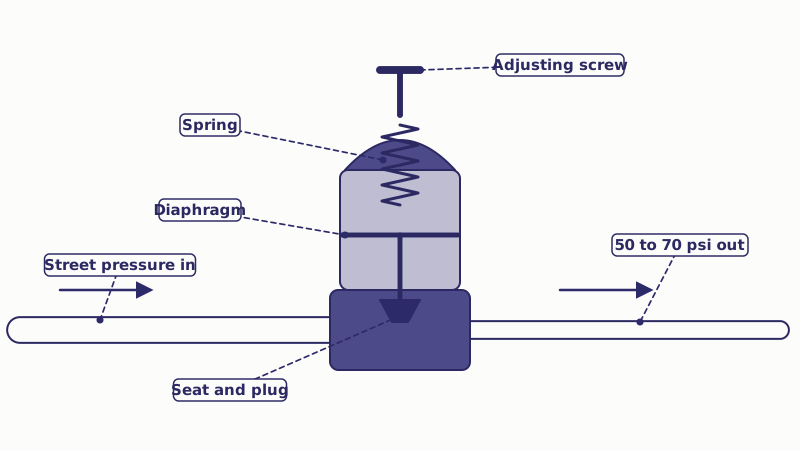
Replace it if pressure is above 80 psi, erratic or very low with the valves open. A plumber measures the pressure with a gauge before and after the work and gives you the numbers. See why your water pressure is low for the other causes to rule out first.
A PRV and a main shut-off are often replaced in one visit, since the plumber has to turn the water off anyway. Ask for a combined quote.
How do I compare quotes fairly?
Compare the same scope. A quote should say which valves are being replaced, the type and size of each, what is included for access and patching, whether a permit is needed, and the total price. If one quote is much lower, check that it covers the same parts and the same cleanup.
Ask each plumber:
- Which valve are you replacing, and what type of valve will go in?
- Does the price include shutting off at the meter if needed?
- What happens if the pipe is corroded and breaks?
- Is a permit needed, and who pulls it?
- What is the price for a regulator or expansion tank if the plumber finds they are needed?
To get a written quote for a valve or regulator job, use the quote page. We'll arrange for a local plumber to come to you and look at the work first.
Common questions
How long does it take to replace a shut-off valve?
A fixture valve takes about half an hour to an hour. A main shut-off takes one to three hours, longer if the wall has to be opened or the water has to be shut off at the street. Plan for the whole house to be without water for the duration of the job.
What should I ask before I hire someone to replace a shut-off valve?
Ask what type of valve will be installed, whether the quote covers access and patching, and what happens if the pipe is corroded. Ask whether a permit is needed. Ask for the total in writing. A quote with a flat figure and no scope is a warning sign.
Does someone need to be at the property?
Yes, or someone you trust. The plumber needs access to the valve, the meter and the fixture, and water to the house goes off for a time. If the valve is behind a locked gate or in a closet, make sure the plumber can reach it.
Can I replace a shut-off valve myself?
A fixture stop under a sink is a common DIY job for people who can solder or use compression fittings and shut off the water. A main shut-off is a job for a plumber, because a mistake floods the house and an old pipe can break. Work on gas lines is never DIY.
Does a cheap valve mean a poor job?
Not by itself. The valve is a small part of the price. What matters is the type, the fit and the work. A quarter-turn ball valve is a good choice on a main, and a plumber should tell you which one is going in.