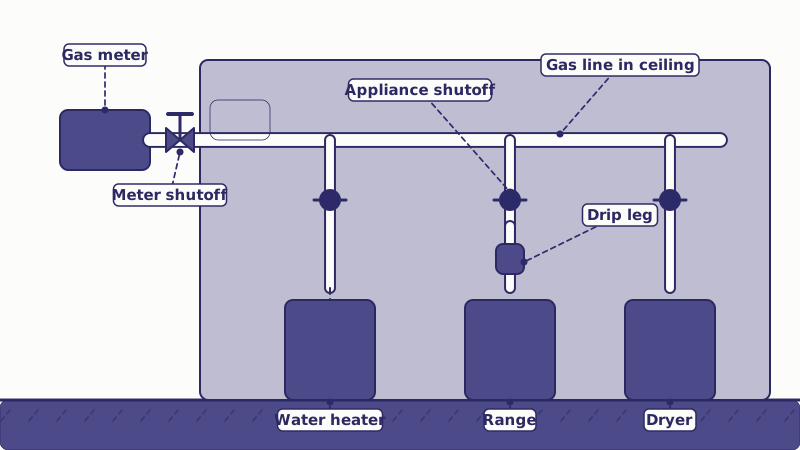
A plumber is the right trade for a gas line in a home. We'll arrange a local plumber to visit, look at where the gas needs to go, and give you a written quote before anything starts. This page explains who does the work, what the City of Los Angeles requires, and what the common jobs cost. If you smell gas right now, skip the page and read the safety box lower down. For the wider picture of what we cover, start on the home page.
Do plumbers hook up gas lines?
Yes. Running gas pipe to a stove, dryer, water heater, fireplace, outdoor grill or fire pit is plumbing work in California, and a local plumber who holds the right license class does it. The job covers the pipe, the shutoff valve, the connection to the appliance and a pressure test, and the City inspects it before the line is put to use.
Most calls we hear about fall into a few types: a new line to a gas range when someone swaps from electric, an extension to an outdoor kitchen, a stub for a fireplace, a line moved because of a remodel, and a repair after a leak. Each one has the same backbone: a plan for the route, a permit, a pressure test and an inspection.
Two things stay outside a homeowner's reach. The gas main under the street and the meter belong to the utility. In most of the City that is SoCalGas, and the City code itself says no permit is needed for the meter or the pipe between the main and the meter. Everything downstream of the meter is the building's piping, and that is where a plumber works.
Who is allowed to install or repair a gas line in a home?
In California, gas piping work is done by a contractor holding a plumbing license class from the Contractors State License Board, which is the C-36 plumbing classification. A gas line is also the one job we would not hand to anyone who has not done it before, because a bad joint can leak without any warning.
Check any contractor yourself on the CSLB license lookup at cslb.ca.gov before you agree to a price. You want the license active, the classification to include plumbing, and the name on the license to match the name on the contract. California law also caps a home improvement down payment at $1,000 or 10 percent of the contract price, whichever is less, so a request for half up front is a warning sign.
One narrow exception sits in the code: LAMC 94.103 lets a connection under six feet between an existing gas outlet and an appliance go without a permit. New pipe, longer runs and anything hidden in a wall are different, and they need a permit.
Does a gas line job need a permit in Los Angeles?
Yes. The Los Angeles Municipal Code says no one may add, alter, install, move, repair or replace a plumbing system, which includes fuel gas piping, without a plumbing permit from LADBS. The pipe is tested and inspected before it is covered up, and the gas is not connected until the City signs off.
That sequence protects you. Inspection means someone who does not profit from the job looks at the joints, the supports, the test result and the venting. Skipping it can also cause trouble later. An unpermitted gas line can also cause questions when you sell the property.
Ask your plumber who pulls the permit, who requests the inspection, and whether the fee is in the quote. Many quotes include them. Some price them as a line item.
How much does it cost to have a gas line installed?
Published cost guides put a short appliance hookup at a few hundred dollars to about $1,200, and a longer or harder run at $2,000 to $5,000 or more. Most guides count $15 to $25 per foot for a simple run and more where trenching, concrete or tight access is involved. Treat these as a guide, not a quote.
| Job | Typical range from published guides | What moves the price |
|---|---|---|
| Gas range or stove line | $200 to $1,200 | Distance from the existing line, wall or cabinet access |
| Gas fireplace or log set | $300 to $2,500 | Floor or roof routing, vent type, hearth finish |
| Gas dryer outlet | Often at the low end of the stove range | Length of run, laundry room access |
| Outdoor kitchen, grill or fire pit | $500 to $2,000 and up | Trench length, crossing a patio or driveway |
| Extending an existing line | $350 to $2,000 | Pipe size, number of outlets, pressure test |
| Permit and inspection | $50 to $500 | City fee, plan check on larger systems |
The ranges come from national guides, so a Los Angeles job with a slab, stucco or a hillside lot can land higher. A line in an older house may also need a bigger pipe upstream, because new demand adds to what the existing pipe already feeds. The gas line cost page breaks the numbers down further. For flexible pipe, see how a half-inch flexible line is used.
Can a plumber run a gas line for a stove, a fireplace or a dryer?
Yes, and these are the most common residential gas jobs. A plumber sizes the pipe for the appliance's input rating, chooses a route, installs a shutoff valve within reach of the appliance, tests the line and arranges the inspection. The appliance itself may need its own permit or an installer with a different license class.
For a stove, the cost depends mostly on distance. If the gas meter is near the kitchen wall, the run is short. If the kitchen sits at the far end of a 1950s bungalow, the pipe may run through a crawlspace or attic. For a fireplace, the plumber checks that the unit's vent rules, clearances and any local rules on gas logs are met before cutting into a wall.
When you phone for a quote, have the appliance model number ready. It tells the plumber the gas input, which sets the pipe size.
Can a plumber move or cap a gas line?
Yes. Moving a line during a kitchen or bath remodel and capping an unused outlet are routine plumbing jobs. Both need a permit when the pipe is cut or reconfigured, and the capped line is pressure tested so you know the cap holds. Never cap an old gas pipe yourself, even if the gas is off at the meter.
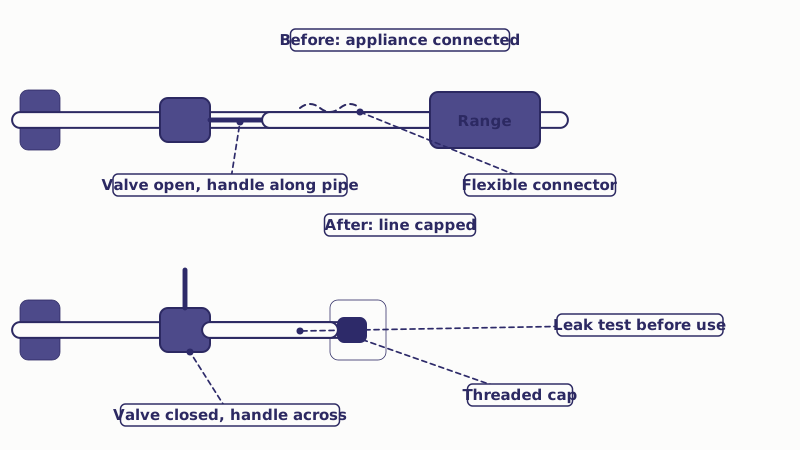
Capping matters in older Los Angeles houses because old gas stubs, left over from a removed range or a wall heater, may have been closed with a plain cap or a plug that has aged. If you find a hissing stub or smell gas near one, treat it as a leak, not a project.
Moving a gas meter or the line from the street side is the utility's work, not a plumber's. Ask SoCalGas first if the meter location has to change.
Is gas piping part of new construction plumbing?
Yes. In a new build, addition or gut remodel, the plumber installs the gas manifold or branch piping at the same stage as the water supply and drains, in the open framing, before walls close. That is cheaper than cutting into finished walls later. The inspection happens before drywall.
Bring the appliance list to the plumber early: range, cooktop, oven, tankless heater, fireplace, dryer, outdoor kitchen, pool heater. Adding one outlet to open framing costs far less than adding it after the finish. Big loads such as a tankless heater or pool heater can force a larger pipe, so the plumber needs the whole list, not just the kitchen.
If a building permit for the project is valued at $10,000 or more and the building has fuel gas piping, LADBS also requires an approved seismic gas shutoff valve. See emergency gas shut off valve earthquake for how that rule works.
What is a normal service call for a plumber?
A normal service call is a visit where the plumber looks at the problem, tells you what is wrong and gives you a price before starting. Many plumbers charge a visit or diagnostic fee, and some credit it against the repair if you go ahead. Ask which one applies before the plumber arrives.
For a gas line job, the first visit usually includes a look at the meter, the appliance, the possible pipe route and the access. Expect questions about the appliance, the building's age and whether the work is part of a remodel. A fair quote lists the pipe size and length, the fittings, the shutoff valve, the pressure test, the permit and the inspection, and says who handles each. Our service call cost page explains what a visit can include.
What should you do if you smell gas?
Leave the building right away, take everyone with you, and call SoCalGas at 1-800-427-2200 from outside. You can also call 911. Do not use a light switch, phone, lighter or anything that can spark inside. Do not try to find the leak. Only after SoCalGas or the fire department clears the building should a plumber look at the pipe.
SoCalGas also advises that after an earthquake you should shut off the gas only if you smell, hear or see signs of a leak and it is safe to reach the meter. If you do turn it off at the meter, leave it off and call SoCalGas to restore service. Only SoCalGas field employees turn the meter back on. The earthquake shutoff valve page covers the rest.
Common questions
How much does it usually cost to replace a gas line?
Replacing a short branch to one appliance often costs a few hundred to about $1,500 once the permit and test are counted. Replacing a long run, a buried line or an old iron pipe through the house can reach $2,000 to $5,000 or more. Access, pipe length and size, and whether walls or concrete have to be opened drive the price. A written quote after a site visit is the only reliable number.
How long does plumber gas line work take?
A simple appliance hookup is typically a few hours for the pipe work. A new run through a crawlspace, wall or yard can take a day or more. The permit and inspection sit on top of that: the plumber pulls the permit, finishes the pipe, pressure tests it and the City inspects before gas goes on. Schedule the inspection when you schedule the work.
What should I ask before I hire someone for plumber gas line work?
Ask for the CSLB license number and look it up yourself. Ask who pulls the permit, what the written quote covers, and whether the pressure test and inspection are in the price. Ask what pipe material and size the job needs, and what happens if the City inspector requires a change. Do not pay more than $1,000 or 10 percent up front.
Can I fix a gas leak myself?
No. Leave the building, call SoCalGas at 1-800-427-2200 from outside, and call 911 if you feel in danger. Gas piping repair is regulated work that needs the right license and, in Los Angeles, a permit. The most you should do yourself is stay out of the building and keep everyone away until the utility or the fire department says it is safe.
Can I find a natural gas plumber near me for a same-day gas job?
We'll arrange a local plumber to come to you, and you can ask for the earliest visit on the quote page. We can't promise a time slot here. For a suspected leak, do not wait for a plumber: leave, call SoCalGas and 911 first. For an appliance or remodel line, the plumber's schedule and the permit set the pace.